Conservation
The first safari company to realise the crucial role it could play in conservation, Ker & Downey has been at the forefront of scientific research and wilderness preservation in East Africa since the 1940s. We have outfitted safaris for the Smithsonian and the American Museum of Natural History, and a percentage of our profits goes toward conservation and social development projects supported by our guides.
The East African Wild Life Society (EAWLS)
In 1961, Donald Ker and Syd Downey were part of a pioneering group that started the Kenya Wildlife Society — now EAWLS — to promote research, advocacy and community education on the protection of wildlife and vulnerable ecosystems. Today EAWLS publishes Swara, the voice of conservation in East Africa.
The Kenya Wildlife Trust (KWT)
In 2007, Ker & Downey’s guides helped establish KWT to fund big-cat conservation, wildlife scholarships and conservation education in Amboseli, Samburu and the Maasai Mara. For every guest who stays in a K&D camp, we donate a proportion of profits to KWT.
Rhino Protection
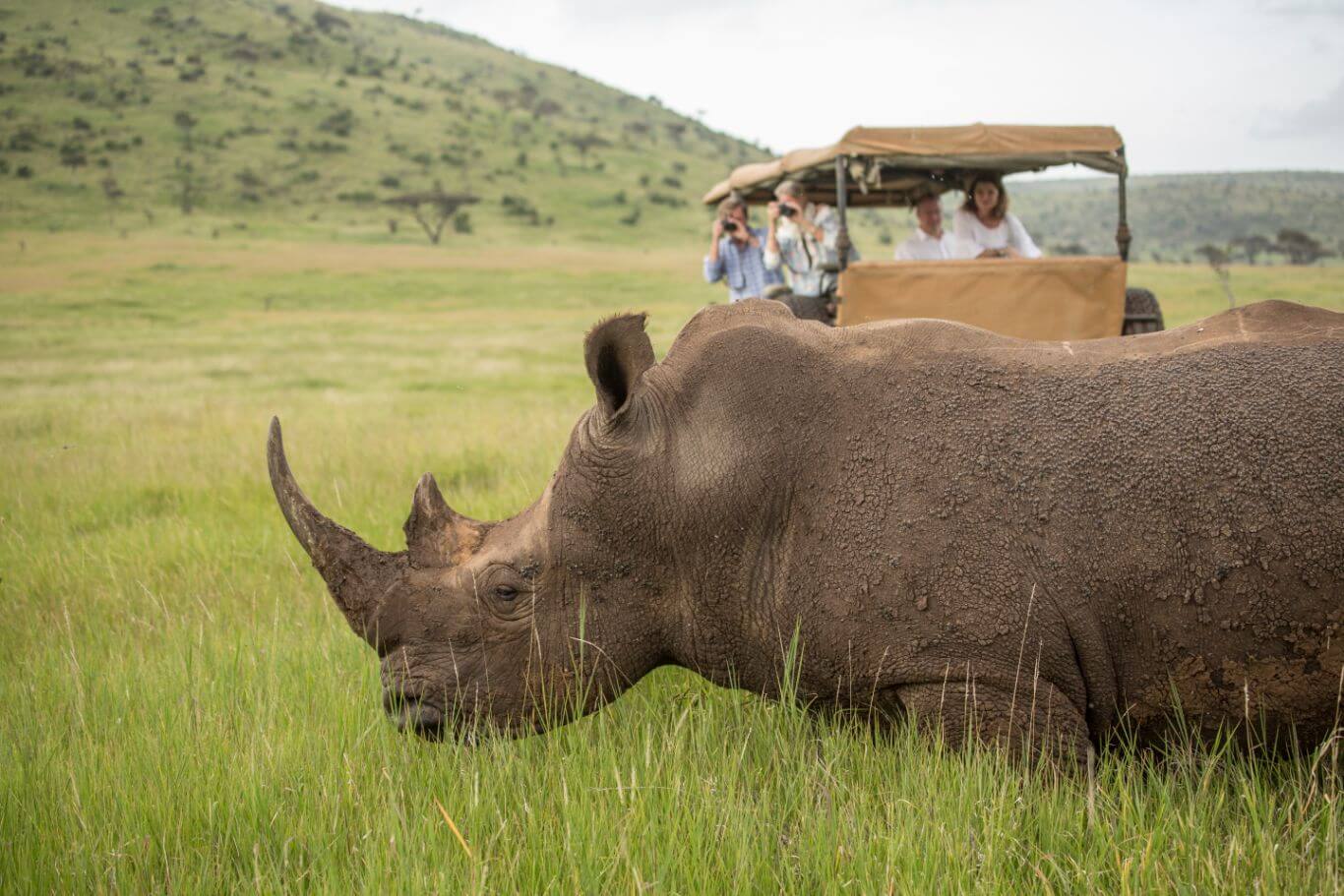
K&D began supporting rhino rescue in 1986 with the donation of a vehicle and conservation equipment, and has since backed programmes protecting black rhino populations in Kenya and Tanzania, including Lewa Wildlife Conservancy and Tsavo Trust.
New Conservation Areas
For decades our guides have helped create community-run conservancies in critical wildlife dispersal areas, including the Mara Conservancy, Kitirua Conservancy near Amboseli, and the Ishaqbini and Meibae Conservancies.
The Kenya Professional Safari Guides Association (KPSGA)
In 1996, Ker & Downey helped set up the KPSGA to provide a streamlined standard by which guides could be measured — a template now used for guide accreditation across the continent.
Our Conservation Partners
Our guides and guests are proud, long-standing supporters of the organisations safeguarding Africa’s wildlife and wild places. A proportion of every safari helps fund their work.